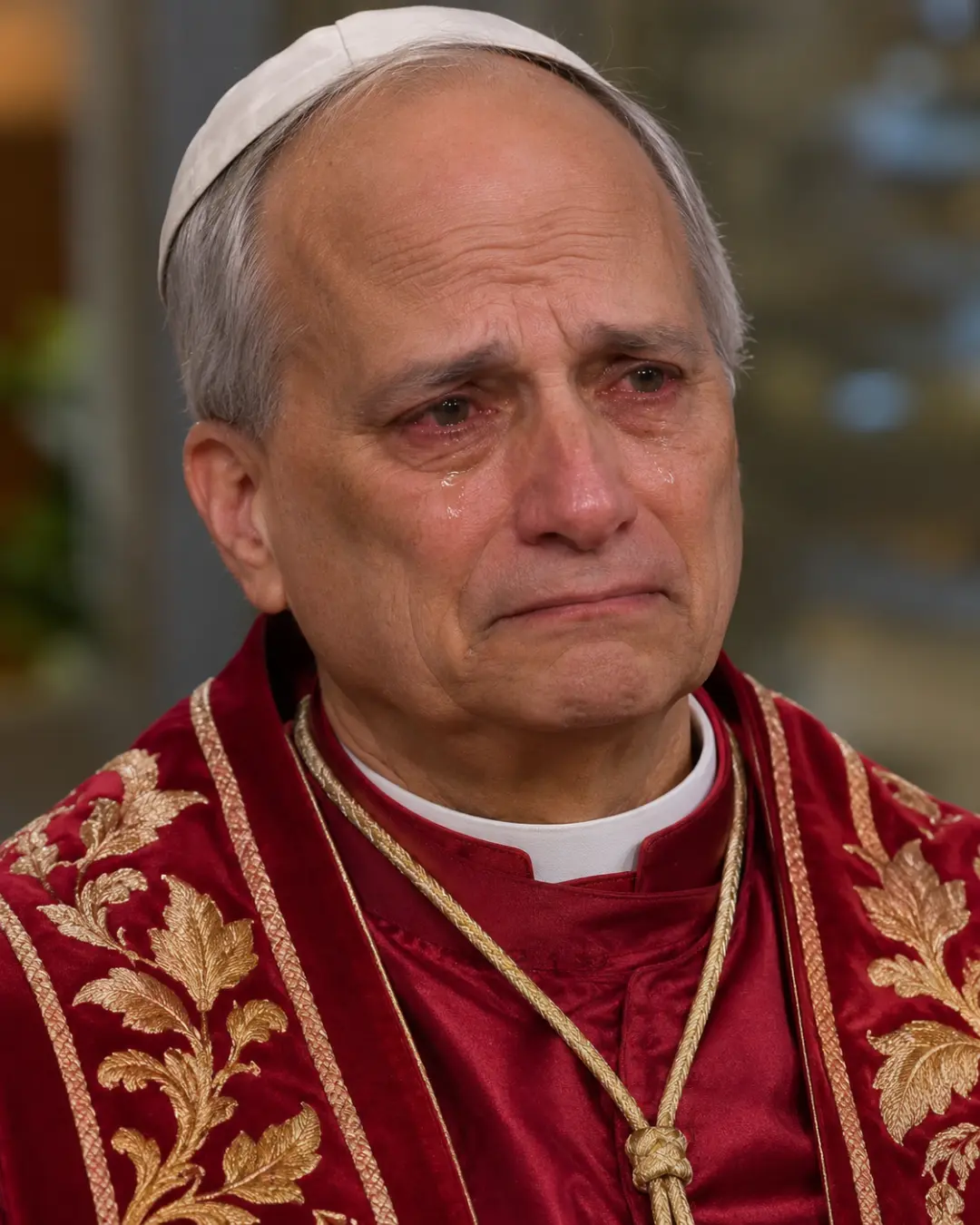
ROME, ITALY — In an imagined extraordinary evening at the Vatican, an announcement begins circulating through the ancient corridors of the Apostolic Palace, drawing the attention of clergy, journalists, and Catholics around the world. At the center of the unfolding story stands Pope Leo XIV, whose recent medical challenges have already inspired an outpouring of prayers and concern.
The first reports contain remarkably little information. A special gathering has been arranged, senior Vatican representatives have been contacted, and an important declaration is expected. No explanation accompanies the invitation, leaving observers to wonder whether the announcement concerns the pontiff's health, the future direction of the Church, or an unexpected decision that could reshape his leadership.
As journalists gather near St. Peter's Square, the mystery deepens. Some speculate about changes to the papal schedule, while others wonder whether a major international initiative is about to be unveiled. Yet the people preparing the announcement appear determined to keep its central message confidential until the pontiff himself is ready to speak.
The unusual gathering behind Vatican walls
Inside the Apostolic Palace, preparations begin with an atmosphere of unusual seriousness. Vatican officials review documents, coordinate communications, and arrange a small meeting space where the pope will address a selected group of religious representatives.
The gathering is not intended to be an elaborate ceremony. There are no extravagant decorations, no dramatic procession, and no indication that the pontiff wishes to create a spectacle. Instead, the setting reflects simplicity, emphasizing the importance of the message rather than the grandeur of the occasion.
Nevertheless, the presence of senior Church figures immediately raises questions. Why has the meeting been organized so carefully? What requires the attention of people representing different areas of Catholic life?
For those following the pope's recent experiences, the timing seems especially significant. After confronting a serious medical challenge, he has spoken about gratitude, resilience, and the responsibility of remaining close to people who are suffering.
Could this announcement be connected to those reflections?
A journey that changed his perspective
In the imagined address, Pope Leo XIV begins by recalling the emotional weight of receiving unexpected medical news. He describes how quickly ordinary routines can change when a person is confronted with uncertainty about the future.
The pontiff does not present himself as someone immune to fear. Instead, he acknowledges that even deeply held faith does not eliminate every difficult emotion. Courage, he suggests, often means continuing forward while accepting that not every question has an immediate answer.
He then turns his attention toward the people who accompanied him through his recovery. Doctors, nurses, assistants, and countless individuals who offered prayers become central figures in his reflections.
For a moment, the gathering seems less like an official Vatican announcement and more like a personal expression of gratitude. But the pontiff has not yet revealed why everyone has been assembled.

A decision that surprises senior officials
The atmosphere changes when Pope Leo XIV introduces a proposal he has reportedly been considering privately in this imagined story. He wants to establish a coordinated international effort encouraging Catholic institutions to strengthen their support for vulnerable patients and overwhelmed caregivers.
The initiative would involve hospitals, parishes, charitable organizations, and volunteers working together to identify communities where people face significant barriers to compassionate care.
Rather than concentrating exclusively on major cities or prominent medical institutions, the proposal emphasizes isolated communities, elderly individuals living alone, and families struggling to navigate complicated healthcare systems.
Some Vatican representatives are surprised by the initiative's proposed scale. Others immediately recognize how closely it reflects the Church's longstanding tradition of caring for the sick.
Yet the pope's ambitions extend beyond financial assistance. He wants the initiative to address loneliness, emotional exhaustion, and the feeling of being forgotten during difficult periods.
The moment the room falls silent
As the address continues, the pontiff introduces a deeply personal element to his proposal. He explains that the initiative should not carry his name or be treated as a monument to his leadership.
Instead, he wants its identity to reflect the people it serves.
In the imagined scene, he asks those present to consider the experiences of patients who spend holidays in hospital rooms, parents who struggle to afford transportation to medical appointments, and caregivers who quietly sacrifice their own wellbeing.
The room becomes silent as he describes the importance of simple acts of presence. A conversation, a visit, or a helping hand can sometimes provide reassurance that no formal announcement can replace.
His message challenges the gathering to reconsider what meaningful leadership looks like. Influence, he argues, is valuable only when it can be transformed into practical service.
An announcement that reaches beyond Rome
Once the proposal becomes public in this imagined account, reactions begin arriving from Catholic organizations across several continents. Hospital chaplains express enthusiasm, charitable leaders discuss possible partnerships, and parish volunteers begin imagining how their communities could participate.
Not everyone agrees about the best way to implement the initiative. Some emphasize the need for clear financial oversight, while others argue that existing charitable programs should be strengthened before new structures are introduced.
These concerns do not diminish the proposal's significance. Instead, they reveal the practical challenges of transforming an inspiring message into a sustainable international effort.
Pope Leo XIV welcomes the discussion, encouraging those involved to prioritize transparency, collaboration, and the needs of patients themselves.
The announcement gradually becomes more than a personal declaration. It opens a conversation about how religious communities can respond to suffering with practical compassion.
The final confirmation nobody anticipated
As the gathering approaches its conclusion, the pontiff returns to the question that has dominated the evening.
What exactly is being officially confirmed?
The answer arrives not as a dramatic change in Church leadership, but as a renewed commitment to a particular mission. In this imagined account, Pope Leo XIV is confirmed as the founding patron of an international Catholic initiative dedicated to accompanying seriously ill patients and their families.
The initiative is designed to continue beyond any single pontificate, with responsibility shared among established charitable institutions and local communities.
For those expecting a political announcement or a startling change in Vatican leadership, the revelation is unexpected.
But its deeper significance becomes apparent when the pope explains why the initiative matters so much to him. His personal experience has reminded him that suffering can isolate people, while compassion can restore a sense of belonging.

The message that remains after the ceremony
As the meeting ends, the imagined pontiff offers a final reflection. He reminds those present that the true measure of the initiative will not be the attention it receives on its first day.
Its success will be determined by the lives it touches long after the headlines disappear.
Outside, the lights of St. Peter's Square illuminate the evening sky, while visitors continue walking beneath the imposing columns. Most remain unaware of the detailed discussions taking place inside the Vatican, but the message is already beginning to spread.
And that is the final twist in this imagined announcement.
The mystery was never about a secret transfer of power or an approaching institutional crisis. It was about a spiritual leader choosing to turn a deeply personal experience into a lasting commitment to others.
What began as an evening filled with speculation ends with a question that challenges everyone listening: When another person is suffering, what are we willing to do to help?