🚨💥 SHOCKING NEWS: “I NEVER THOUGHT YOU'D DO THIS TO ME!” — WADE WILSON CONFRONTS A LONGTIME FRIEND OVER A BROKEN PROMISE, AND THE UNEXPECTED REACTION SENDS SHOCKWAVES THROUGH THE CRIMINAL JUSTICE COMMUNITY! 😱🔥
A promise made years earlier. A friendship tested by the consequences of a criminal conviction. And an imagined confrontation that raises disturbing questions about loyalty, truth, and accountability.
In this fictional courtroom drama inspired by the public attention surrounding convicted murderer Wade Wilson, a private disagreement with a longtime acquaintance becomes the center of an emotionally charged story about trust and the limits of personal loyalty.
The imagined encounter unfolds inside a secure meeting room at a Florida correctional facility.
Wilson sits across from someone he once considered a trusted friend.
For several minutes, neither speaks.

Between them lies a folder containing old correspondence, handwritten notes, and a letter that has become the source of their disagreement.
What initially appears to be a routine conversation gradually develops into a confrontation neither character seems prepared to handle.
Then Wilson breaks the silence.
“I never thought you'd do this to me!”
The statement marks the beginning of a difficult exchange about a promise that was never supposed to be broken.
But the fictional story soon reveals that the disagreement involves something far more complicated than friendship.
It concerns the difference between protecting someone and telling the truth.
💔 THE PROMISE THAT STARTED EVERYTHING
In the imagined narrative, Wilson's longtime acquaintance had known him before his criminal case attracted widespread public attention.
Their relationship stretched back several years.
They had shared conversations about family, personal difficulties, and the choices that shaped their lives.
After Wilson's arrest, their communication became increasingly complicated.
The friend struggled to reconcile memories of the person they once knew with the gravity of the crimes for which he would later be convicted.
Nevertheless, they continued exchanging occasional letters.
During one conversation, Wilson asked the friend to keep certain personal statements confidential.
The friend initially agreed.
But as time passed, the character began questioning whether that promise could be maintained without compromising personal integrity.
Eventually, the friend decided to seek legal advice about how to handle the information.
Wilson later learned of that decision.
In the fictional scenario, he interpreted it as a betrayal.

The friend, however, believed the situation required greater responsibility than simply honoring an old promise.
Their disagreement became unavoidable.
😱 THE CONFRONTATION THAT CHANGED THE ATMOSPHERE
The imagined meeting begins quietly.
Wilson studies the person sitting across from him.
For several moments, he appears uncertain about how to begin.
Finally, he asks:
“Why did you tell someone about our conversation?”
The friend responds that the situation had become too serious to handle alone.
Wilson shakes his head.
“You promised me.”
The friend acknowledges the agreement but explains that circumstances had changed.
What once seemed like a private conversation now carried implications that could not be ignored.
Wilson leans forward.
His frustration becomes more apparent.
Then he delivers the words that define the fictional encounter.
“I never thought you'd do this to me!”
The friend remains silent.
For several seconds, the room feels unusually tense.
But rather than apologize immediately, the character offers a response Wilson does not expect.
🔥 THE UNEXPECTED REACTION
In the fictional narrative, the friend refuses to describe the decision as a betrayal.
Instead, the character argues that friendship does not require unconditional secrecy.
“I cared about you,” the friend says. “But caring about someone doesn't mean hiding everything they ask you to hide.”
Wilson appears surprised.
The friend continues.
“There are things more important than keeping a promise.”
The conversation shifts.
What Wilson sees as disloyalty, the friend describes as a necessary boundary.
The character explains that the decision was not motivated by revenge, publicity, or personal advantage.
It came from an unwillingness to carry information alone when its significance was uncertain.
In the story, the friend has not claimed to possess new evidence about Wilson's crimes.
The disagreement concerns personal communications and whether confidentiality should be maintained.
That distinction matters.
The fictional encounter does not introduce a new witness, a hidden confession, or an undisclosed development in the criminal proceedings.
Instead, it explores the ethical conflict between personal loyalty and individual responsibility.
⚖️ THE REAL CRIMINAL CASE BEHIND THE PUBLIC ATTENTION
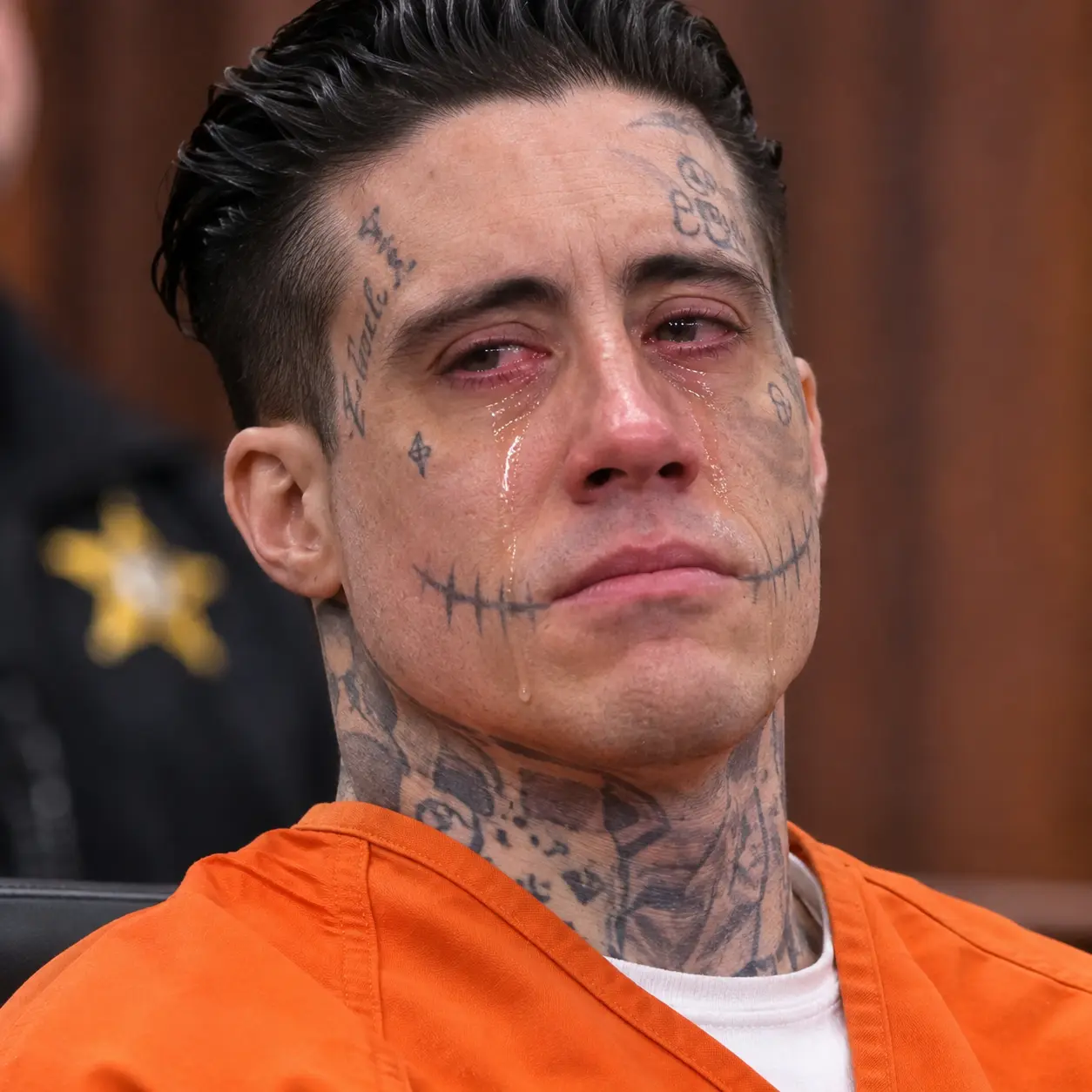
Wade Wilson's actual criminal case involved the murders of Kristine Melton and Diane Ruiz in Cape Coral, Florida, in October 2019.
A Florida jury convicted Wilson in 2024 of first-degree murder and other offenses connected to the crimes.
He was subsequently sentenced to death.
The case attracted widespread attention because of the brutality of the murders, the courtroom proceedings, and the intense online interest surrounding Wilson.
Yet the real human consequences of the case extend far beyond the defendant.
Two women lost their lives.
Their families and loved ones have endured an unimaginable loss.
Any discussion of the case must recognize that reality.
The fictional friendship dispute described here is not part of the established criminal record.
It does not change the convictions, the sentence, or the experiences of the victims' families.
Instead, the imagined narrative uses a separate personal conflict to examine how serious criminal proceedings can affect relationships surrounding a convicted individual.
💥 WHEN LOYALTY BECOMES A MORAL DILEMMA
The central question in the fictional confrontation is whether a promise should always be honored.
Friendship often involves confidentiality.
People share private experiences because they believe someone close to them will listen without judgment.
But confidentiality can become complicated when a conversation raises serious ethical or legal concerns.
In the imagined story, Wilson's friend struggles with that conflict.
The character wants to respect a personal relationship but also recognizes that loyalty has limits.
A promise made in one set of circumstances may become difficult to maintain when the consequences of silence appear more serious.
The friend ultimately decides that seeking professional guidance is preferable to making the decision alone.
Wilson disagrees.
For him, the choice represents another loss of control during an already devastating period of his life.
But the fictional narrative makes an important distinction.
Personal disappointment does not automatically mean someone else has acted wrongly.
And feeling betrayed does not establish that a promise should have been kept.
💔 THE MOMENT THE ARGUMENT BECOMES PERSONAL
As the imagined meeting continues, the friend recalls their earlier years.
There were ordinary conversations, shared experiences, and moments when the future seemed uncertain but full of possibilities.
Wilson listens without interrupting.
For a brief moment, the tension appears to soften.
The friend explains that maintaining contact after his conviction had been emotionally difficult.
Memories of their friendship existed alongside the knowledge of the crimes for which he had been found guilty.
Those realities could not simply be separated.
“I remember who you were to me,” the friend says in the fictional exchange. “But I can't ignore what happened.”
Wilson looks down at the table.
The conversation becomes less confrontational.
For the first time, the two characters appear to understand that their disagreement is about more than a single promise.
It is about the consequences of choices that have permanently changed many lives.
🚨 A DECISION THAT CANNOT BE UNDONE
In the fictional story, Wilson eventually asks whether the friend regrets seeking advice.
The answer is immediate.
“No.”
The friend explains that the decision was difficult but necessary.
There is no attempt to offer an easy explanation.
No dramatic confession.
No sudden revelation capable of changing the criminal case.
Instead, the character accepts that Wilson may never agree with the decision.
That acceptance becomes the most significant moment of the imagined encounter.
The friend is no longer seeking forgiveness at any cost.
The character has decided that maintaining personal boundaries matters more than preserving the appearance of an unchanged friendship.
Wilson remains quiet.
The conversation has reached a point where neither person can persuade the other.
And both recognize that their relationship may never return to what it once was.
❤️ THE DIFFERENCE BETWEEN FORGIVENESS AND ACCOUNTABILITY
One of the central themes of this fictional narrative is the relationship between forgiveness and responsibility.
Forgiveness is a personal decision.
It cannot be demanded or guaranteed.
Accountability, however, involves recognizing the consequences of actions regardless of whether forgiveness is offered.
The friend in the story does not claim that Wilson's disappointment is meaningless.
Instead, the character acknowledges his feelings while refusing to reverse the decision.
That distinction reflects a broader truth.
People can care about someone while refusing to excuse harmful behavior.
They can remember a friendship without agreeing to every request.
And they can establish boundaries without denying that the relationship once mattered.
For Wilson's fictional character, accepting those limits becomes an uncomfortable challenge.
🔥 THE FINAL MOMENTS OF THE IMAGINED MEETING
As the scheduled conversation approaches its end, a correctional officer signals that the visit must conclude.
The friend gathers the folder and prepares to leave.
Wilson remains seated.
For several seconds, neither speaks.
Then he asks one final question.
“Was our friendship ever real to you?”
The friend stops.
“Yes,” comes the response. “But friendship doesn't mean I have to agree with everything you do.”
Wilson looks away.
The friend offers a quiet farewell.
There is no handshake.
No emotional embrace.
No promise to return.
The door opens, and the visitor leaves the room.
Wilson remains seated for a moment before the meeting ends.
The fictional scene closes without reconciliation.
But it leaves behind a difficult question about the meaning of loyalty.
⚖️ THE BIGGER LESSON BEHIND THE STORY
The imagined confrontation illustrates how serious criminal cases can reshape personal relationships.
Friends and relatives of convicted individuals may experience conflicting emotions.
They may remember positive experiences while also confronting painful facts.
They may struggle with guilt, disappointment, anger, or uncertainty about maintaining contact.
Those feelings do not erase the seriousness of criminal conduct.
Nor do they diminish the experiences of victims and their families.
In Wilson's real case, the murders of Kristine Melton and Diane Ruiz remain the central facts.
The fictional disagreement does not create an alternative explanation for those crimes.
Its purpose is to explore a separate moral question: when does loyalty become incompatible with personal responsibility?
💥 ONE BROKEN PROMISE. ONE DIFFICULT CONFRONTATION. ONE UNANSWERED QUESTION.
The fictional story ends with two former friends moving in different directions.
Wilson believes an important promise has been broken.
His friend believes keeping that promise would have required ignoring a personal moral boundary.
Neither changes the other's mind.
Their shared history remains, but it can no longer define the relationship by itself.
The imagined encounter offers no dramatic legal breakthrough and no hidden revelation.
Instead, it presents a difficult truth about friendship.
Trust matters.
Promises matter.
But responsibility matters too.
“I never thought you'd do this to me!”
In this fictional courtroom-inspired drama, those words represent disappointment rather than proof of wrongdoing by the person who broke the promise.
And the final question is not simply whether a friend should remain loyal.
It is whether loyalty should ever require someone to remain silent when their conscience tells them otherwise.
#WadeWilson #FloridaCriminalCase #CriminalJustice #CourtroomDrama #JusticeAndAccountability #TrueCrimeDiscussion #LegalSystem #TrustAndLoyalty #EthicalDilemmas #CrimeAndJustice
 The Announcement That Left Loved Ones Speechless