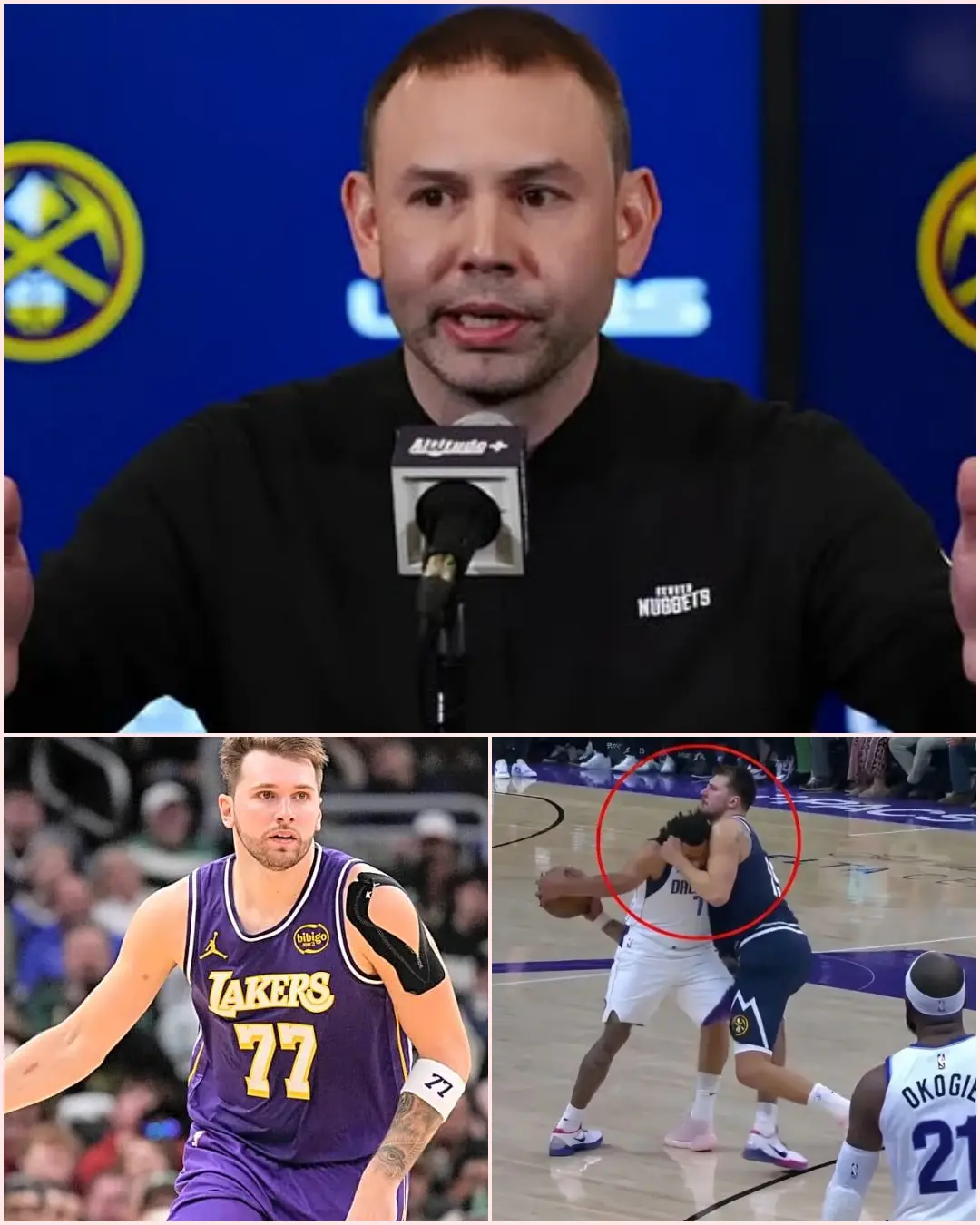
The ultra-competitive world of professional basketball operates under an unrelenting international spotlight, where global superstars are judged by every missed shot, every turnover and every game that fails to end in victory. For Los Angeles Lakers superstar Luka Dončić, the expectations have reached another level as he prepares to become the central figure of a new era in Los Angeles. After years of extraordinary performances, individual accolades and intense playoff battles, the Slovenian guard now faces a challenge that extends far beyond putting points on the scoreboard. He must lead a franchise with a legendary history, satisfy millions of demanding fans and help establish a new identity following LeBron James’ departure. Yet behind the highlights and statistics lies a less visible story about preparation, responsibility and the personal sacrifices required to remain among basketball’s elite. Recent comments from Lakers head coach JJ Redick about Dončić’s leadership have brought renewed attention to the work taking place away from the court. While no verified 15-word public statement matching the viral quotation has been established, the larger question remains compelling: how much does the public really understand about what it takes to carry the Lakers forward?
Deconstructing the Lakers’ Leadership Challenge and the Pressure Surrounding Luka Dončić
The center of this unfolding basketball narrative is Dončić’s evolving role as the face of the Lakers. Following LeBron James’ departure, the franchise enters a new chapter in which Dončić is expected to shoulder greater responsibility for both performance and leadership. Speaking during the team’s September 2026 media day, Dončić described the opportunity as a new challenge and said he felt honored to take it on. His words reflected confidence, but they also highlighted the magnitude of the responsibility awaiting him.
For a player who has been a star since his teenage years at Real Madrid, leadership is hardly unfamiliar territory. Nevertheless, leading the Lakers presents a unique challenge. The organization’s championship history creates expectations that few franchises can match, while the intense Los Angeles media market ensures that every performance becomes part of a much larger conversation. A spectacular scoring night can generate immediate praise, while a disappointing loss can trigger questions about the team’s chemistry, tactical direction and championship prospects.
Redick has emphasized Dončić’s growing leadership responsibilities, identifying him and Austin Reaves as players whose attitudes and conduct will influence the rest of the roster. That responsibility goes beyond producing impressive statistics. It involves communicating with teammates, setting standards during practice and helping the group remain focused when the pressure intensifies. The challenge is not simply to be the Lakers’ best player. It is to help make everyone around him better.
Analyzing the Physical and Mental Toll of Sustaining Superstar Performance
To understand the demands facing Dončić, it is important to look beyond the spectacular passes and long-range shots that have defined his career. Professional basketball requires an extraordinary combination of endurance, coordination, tactical awareness and emotional control. During a season filled with travel, practices and competitive games, even elite athletes must continually manage fatigue while preparing for opponents determined to exploit their weaknesses.
Dončić experienced the consequences of those physical demands during the 2026 postseason, when a Grade 2 hamstring strain prevented him from returning to action. The injury forced him to watch the Lakers compete without him, despite his desire to help the team. He later explained that he had not been close to receiving medical clearance and that he would have played if he had been able to do so. His absence was a difficult reminder that determination alone cannot make an injured athlete ready to compete.
Recovery can require patience even when the stakes are enormous. Fans may see only whether a player appears in the lineup, but rehabilitation involves carefully rebuilding strength, movement and confidence before an athlete can safely return to full competition. Dončić’s experience illustrates why judging commitment solely by whether a player is available for a particular game can overlook important medical realities.
His offseason preparation has also drawn attention. In October 2026, reports highlighted the Lakers coaching staff’s positive assessment of his improved conditioning after a summer focused on physical training. Redick praised the transformation, while Dončić returned to preseason action with an impressive performance against Sacramento.
These developments offer a more concrete picture of the work behind the public spectacle: preparation, recovery and the willingness to adapt in pursuit of a demanding professional goal.

Unveiling the Leadership Philosophy and Team-First Culture Taking Shape in Los Angeles
Beyond physical preparation, Dončić’s growing leadership role is becoming an important part of the Lakers’ evolving identity. Basketball success depends on much more than the performance of a single superstar. Teammates must understand their responsibilities, trust one another and develop a shared approach to difficult situations.
One revealing example emerged during training camp in October 2026, when Redick discussed Dončić’s efforts to bring teammates together during the offseason. According to reporting by The Sporting Tribune, Dončić arranged and paid for a private flight that brought members of the team to Slovenia. Redick highlighted the gesture as an example of the responsibility Dončić was embracing. <Cite refs={["turn910627search4"]}/>
The significance of such an action extends beyond its financial cost. Bringing teammates together away from the demands of competition can create opportunities to build relationships, establish trust and develop a stronger sense of shared purpose. Those connections can become particularly valuable when a team encounters adversity during a long season.
Leadership, however, is not always comfortable. A player who becomes the center of a franchise also becomes a natural focus for criticism when the team struggles. Dončić must balance his individual responsibilities with the need to encourage teammates, respond constructively to setbacks and maintain consistency throughout the season.
The Lakers’ future will depend on whether that leadership translates into collective progress. Reaves and the rest of the roster will have important roles to play, and coaching decisions will shape how effectively the team functions. Dončić may be the central figure, but even the most talented player cannot win a championship alone.
Examining How Sports Media and Fans Judge Modern Superstars
The intense scrutiny surrounding Dončić reflects a broader issue in modern sports culture. Social media has made it possible for fans to respond instantly to every performance, often reducing complicated games to a handful of statistics or a single controversial moment.
A superstar who records a triple-double may be celebrated as a generational talent one night and criticized for defensive mistakes the next. An injured player may face questions about availability even when medical circumstances make a return impossible. These reactions can obscure the larger context in which athletes perform.
Dončić’s postseason injury demonstrated how quickly public expectations can collide with medical reality. His frustration at being unable to help the Lakers was understandable, but the decision about whether he could return ultimately depended on his recovery and medical clearance, not simply his competitive desire.
None of this means that superstar athletes should be exempt from criticism. Performance matters, and supporters have legitimate reasons to question coaching decisions, team construction and results. The important distinction is between informed criticism and assumptions that ignore relevant facts.
Recognizing an athlete’s sacrifices does not require pretending that every decision is perfect. Instead, it allows fans to evaluate performance with a fuller understanding of the physical demands, tactical responsibilities and circumstances involved.
For Dončić, the challenge will be to turn that understanding into sustained results on the court. The Lakers’ supporters are not merely hoping for spectacular highlights. They want a team capable of competing at the highest level, and they will judge the season by how effectively its players meet that goal.

Charting the Future of the Lakers and Dončić’s Defining Leadership Era
As the Lakers prepare for the 2026–27 campaign, Dončić enters a pivotal period in his career. His responsibilities have expanded, the team’s identity is changing and expectations remain enormous. The departure of James creates an opportunity for Dončić to establish his own leadership style while helping a reshaped roster develop into a cohesive contender.
The road ahead will not be determined by one inspirational speech or a single preseason performance. It will depend on consistency, health, chemistry and the ability of the entire organization to respond when difficulties arise. Dončić’s conditioning work and efforts to bring teammates together offer encouraging signs, but the ultimate measure will be how the Lakers perform when the regular season becomes more demanding.
There will inevitably be moments when critics question his decisions or wonder whether the team has enough support around him. There will also be nights when his passing, scoring and creativity remind fans why he has become one of basketball’s most recognizable stars.
What should not be forgotten is that leadership is often built through actions that receive little attention. It can mean preparing carefully during the offseason, supporting teammates away from the arena, accepting responsibility after a difficult loss and remaining patient when recovery takes longer than expected.
Dončić’s story is still being written. Whether he can guide the Lakers toward another championship remains an open question, but his expanding role already makes this season an important test of his career.
Ultimately, greatness is not measured by statistics alone. It also involves resilience, accountability and the ability to bring people together around a common objective. For Luka Dončić, the real challenge is to transform his extraordinary individual talent into the kind of collective success that Lakers fans expect.
And as the new season unfolds, one question will continue to follow him: can the superstar who has spent years carrying enormous expectations become the leader who carries an entire franchise into its next era?