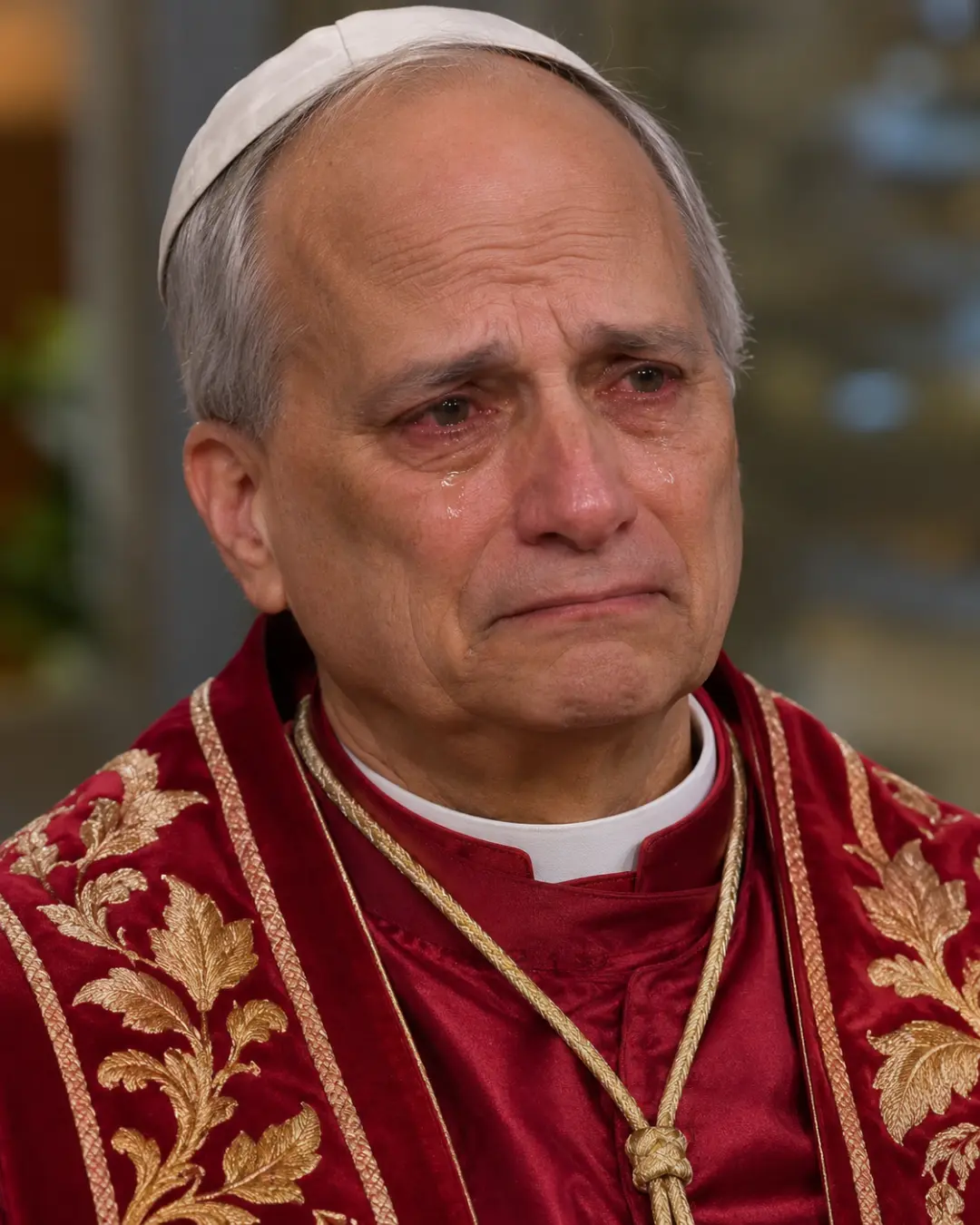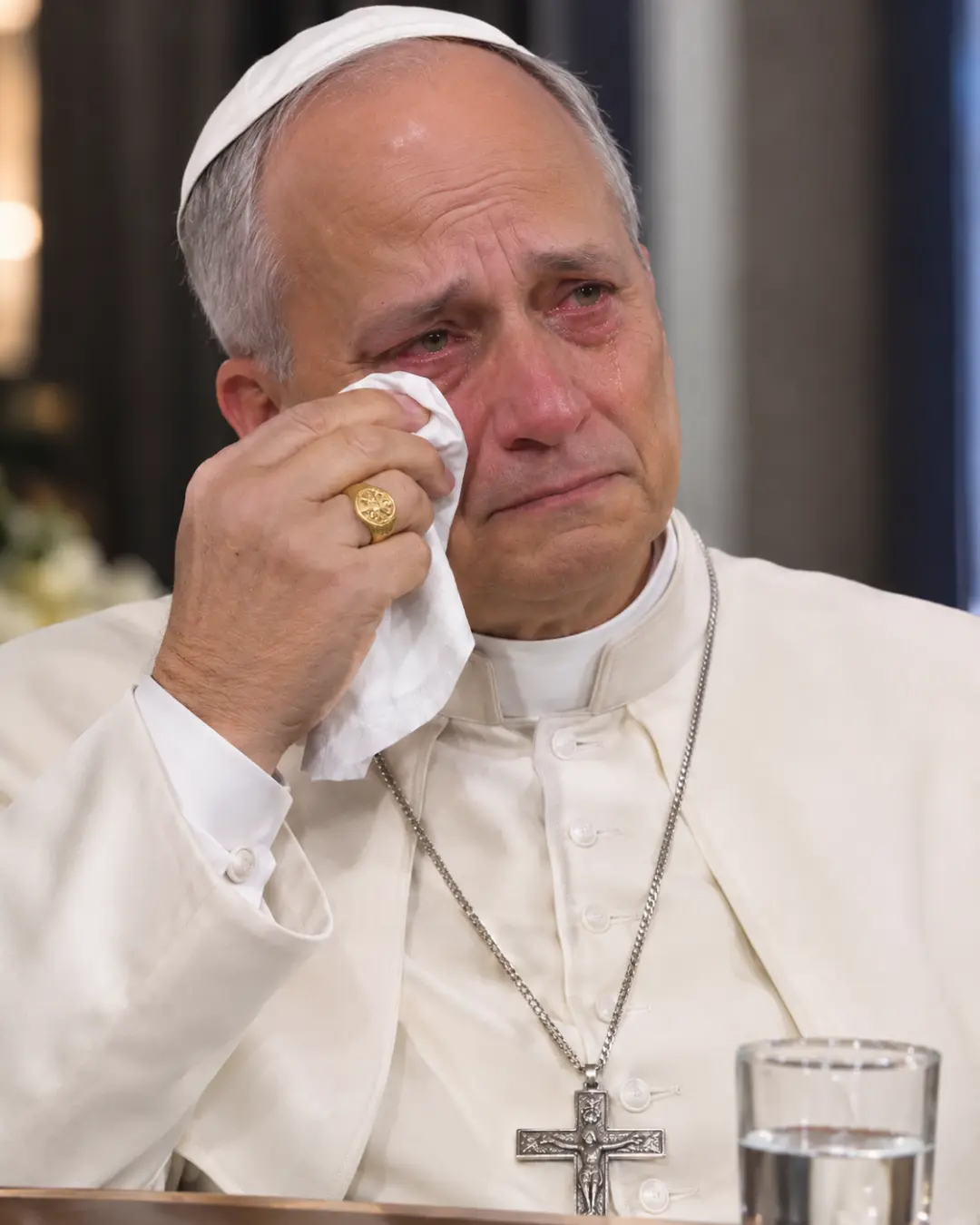
VATICAN CITY — In an imagined emotional gathering inside the Vatican, Pope Leo XIV prepares to share a deeply personal reflection about fear, suffering, and the responsibilities of spiritual leadership. The occasion begins quietly, with only a small audience present, but the atmosphere changes as the pontiff reveals how a difficult period has transformed his understanding of vulnerability.
The gathering has been organized without elaborate ceremony. A few senior Church representatives sit alongside healthcare workers and individuals who have experienced serious illness. The pope enters with a gentle expression, greeting those present before taking his place at a simple wooden table.
At first, nothing suggests that the evening will become especially memorable. The pontiff offers familiar words of gratitude and speaks about the importance of prayer. But when he begins describing the uncertainty that accompanies serious medical treatment, the tone becomes noticeably more intimate.
His audience listens closely as he acknowledges that even someone entrusted with enormous spiritual responsibility can experience moments of anxiety and helplessness.
The confession that changes the atmosphere
In the imagined address, Pope Leo XIV recalls a quiet evening during his recovery when the responsibilities of his office suddenly seemed distant. Without the familiar rhythm of audiences, meetings, and public appearances, he found himself confronting questions that could not be answered through administrative decisions or carefully prepared speeches.
He reflects on the strange experience of waiting for medical information while knowing that millions of people are concerned about his wellbeing. The attention is comforting, but it also creates a sense of responsibility that can be difficult to carry.
The pontiff explains that the most challenging moments were not necessarily those involving physical discomfort. Instead, they were the moments when uncertainty made it difficult to imagine what the following weeks might bring.
His words resonate with several healthcare workers in the room, who recognize similar experiences among the patients they support every day.
For a spiritual leader accustomed to offering reassurance, accepting reassurance from others becomes a profound lesson.

The people who helped him find strength
As the imagined conversation continues, Pope Leo XIV turns his attention toward the medical professionals who cared for him. He speaks about their patience, their discipline, and their ability to treat each patient as a person rather than simply a medical case.
He remembers small gestures that might seem insignificant to outsiders. A nurse taking an extra moment to explain a procedure, a doctor answering a difficult question with compassion, and an assistant quietly ensuring that the room remained peaceful.
These memories lead him to reflect on the importance of kindness in situations where people have little control over their circumstances.
The pontiff then broadens his remarks to include families caring for loved ones through prolonged illness. He acknowledges the emotional exhaustion that can accompany weeks or months of uncertainty, especially when financial difficulties or geographical distance make the experience more complicated.
His message is clear: those providing care deserve compassion just as much as those receiving it.
A deeply personal question
At the center of the imagined gathering, Pope Leo XIV introduces a question that leaves the audience unusually quiet.
What happens when the person others depend on must suddenly learn to depend on them?
For a moment, he allows the question to remain unanswered. The silence is not uncomfortable, but reflective, inviting those present to consider their own experiences of vulnerability.
He then explains that leadership is sometimes misunderstood as the ability to remain strong under every circumstance. In reality, he suggests, meaningful leadership also requires humility, honesty, and a willingness to accept assistance.
The reflection carries particular significance because the papacy is surrounded by centuries of tradition and powerful symbolism. Yet behind those traditions stands a human being who experiences the same fundamental uncertainties as countless others.
In the imagined scene, several listeners become visibly emotional as the pope describes the importance of recognizing that shared humanity.
The words that leave the room silent
The emotional center of the address arrives when the pontiff speaks about individuals who do not receive widespread public attention during illness.
He describes elderly patients whose families live far away, children who struggle to understand medical procedures, and people who must confront frightening diagnoses without strong support networks.
The pope asks his audience to imagine the difference that compassionate presence can make in such circumstances.
He does not offer easy solutions or suggest that faith automatically removes suffering. Instead, he emphasizes that spiritual support should exist alongside professional medical care, practical assistance, and genuine human companionship.
His reflections gradually transform the atmosphere from sadness into determination.
Those present begin to recognize that the pope's message is not simply about his own experiences. It is an invitation to reconsider how communities respond when their most vulnerable members need support.
An unexpected response from the audience
Following the imagined address, several attendees are invited to share their experiences. A hospital chaplain describes the emotional challenges of accompanying families through uncertain medical situations, while a volunteer discusses the loneliness experienced by patients who rarely receive visitors.
A caregiver explains how difficult it can be to maintain hope while managing responsibilities that seem endless. Another participant emphasizes that people facing illness often need someone willing to listen without immediately offering advice.
Pope Leo XIV listens carefully, occasionally asking questions and thanking participants for their honesty.
The gathering begins to feel less like a formal Vatican event and more like a conversation among people united by shared concern.
As the discussion unfolds, a central theme emerges: compassion becomes meaningful when it moves beyond words and takes the form of consistent action.
A promise that carries special meaning
Near the conclusion of the imagined gathering, the pontiff makes a personal commitment. He expresses his intention to place greater emphasis on the experiences of patients, caregivers, and healthcare professionals throughout his ministry.
The commitment is not presented as an entirely new direction for the Catholic Church. Rather, it reflects a renewed appreciation for traditions of charity, pastoral care, and solidarity that have shaped Catholic communities for centuries.
He encourages religious institutions to strengthen existing programs and listen more closely to people who understand the challenges of illness firsthand.
The message receives a warm response from those present, many of whom recognize the importance of connecting spiritual encouragement with practical support.
Yet the most memorable part of the evening is still to come.

The final revelation behind his emotional confession
As the imagined gathering draws to a close, Pope Leo XIV explains that his greatest realization did not concern his own position or the future of his public schedule.
It concerned the extraordinary generosity of people who care for others without expecting recognition.
He describes this quiet dedication as a powerful expression of faith, one that can be found in hospital corridors, family homes, charitable organizations, and ordinary communities throughout the world.
The pontiff's confession ultimately becomes a message of gratitude rather than despair.
For those who entered the room expecting an announcement filled with uncertainty, the ending offers a different perspective. The experience of vulnerability has not diminished the pope's sense of purpose. Instead, it has encouraged him to recognize the importance of service with renewed clarity.
As the audience rises, the atmosphere remains emotional but hopeful. The evening's most powerful message is not a dramatic prediction or an alarming secret.
It is the recognition that even the strongest leaders sometimes need support, and that accepting kindness can be just as meaningful as offering it.
And perhaps the most moving revelation is that the pope's deepest lesson was never about the limits of his own strength, but about the extraordinary strength found in the compassion of others.